Yum Party
Telegram Mini-App
Mobile Game Design
Product Architecture
UX Strategy
Human-Centricity
Hi-fi Prototyping
Duration
January 2025
4 Months
Project
Conception Phase
Technology
Figma
Figjam
My Role
UX / UI Designer
Context
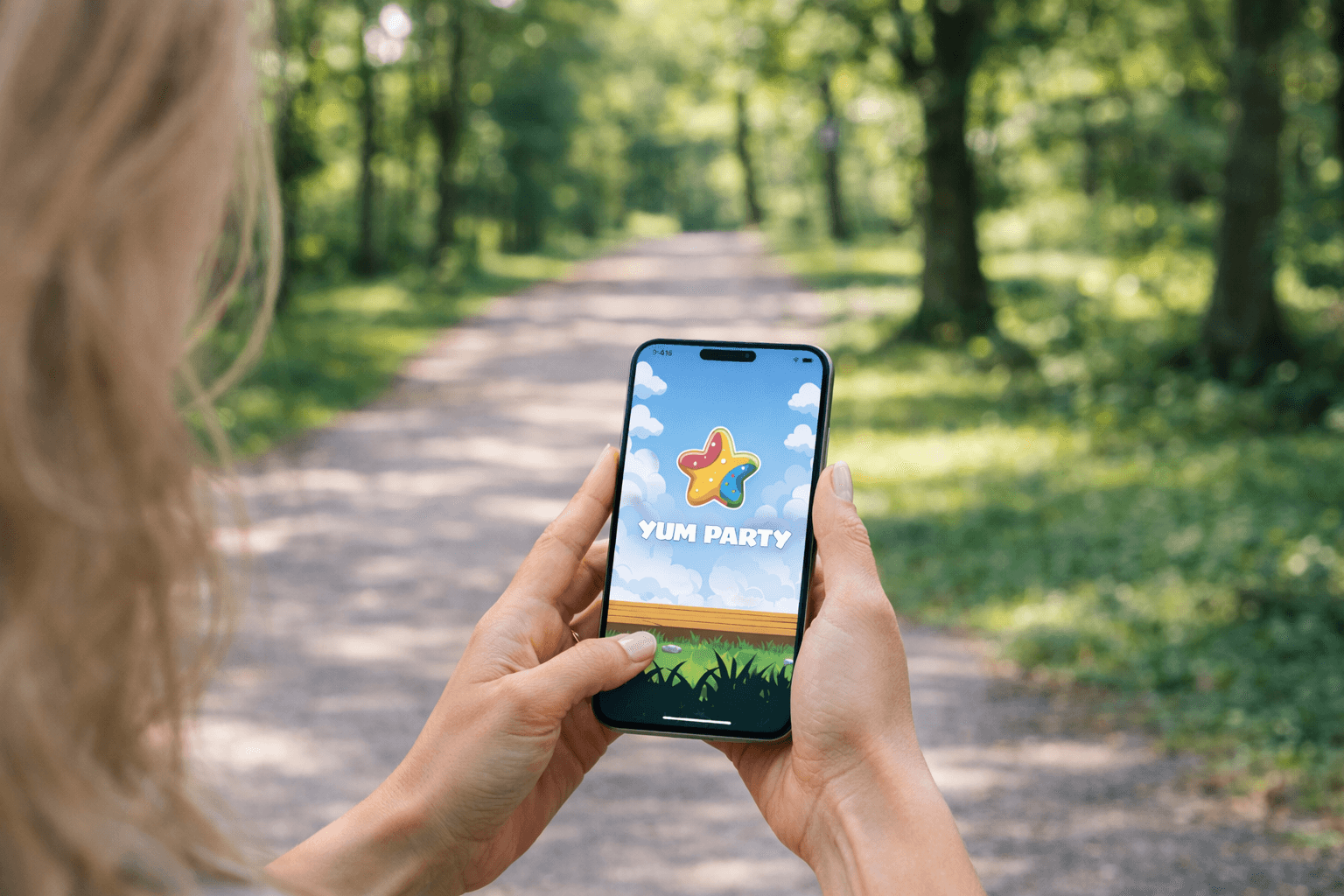
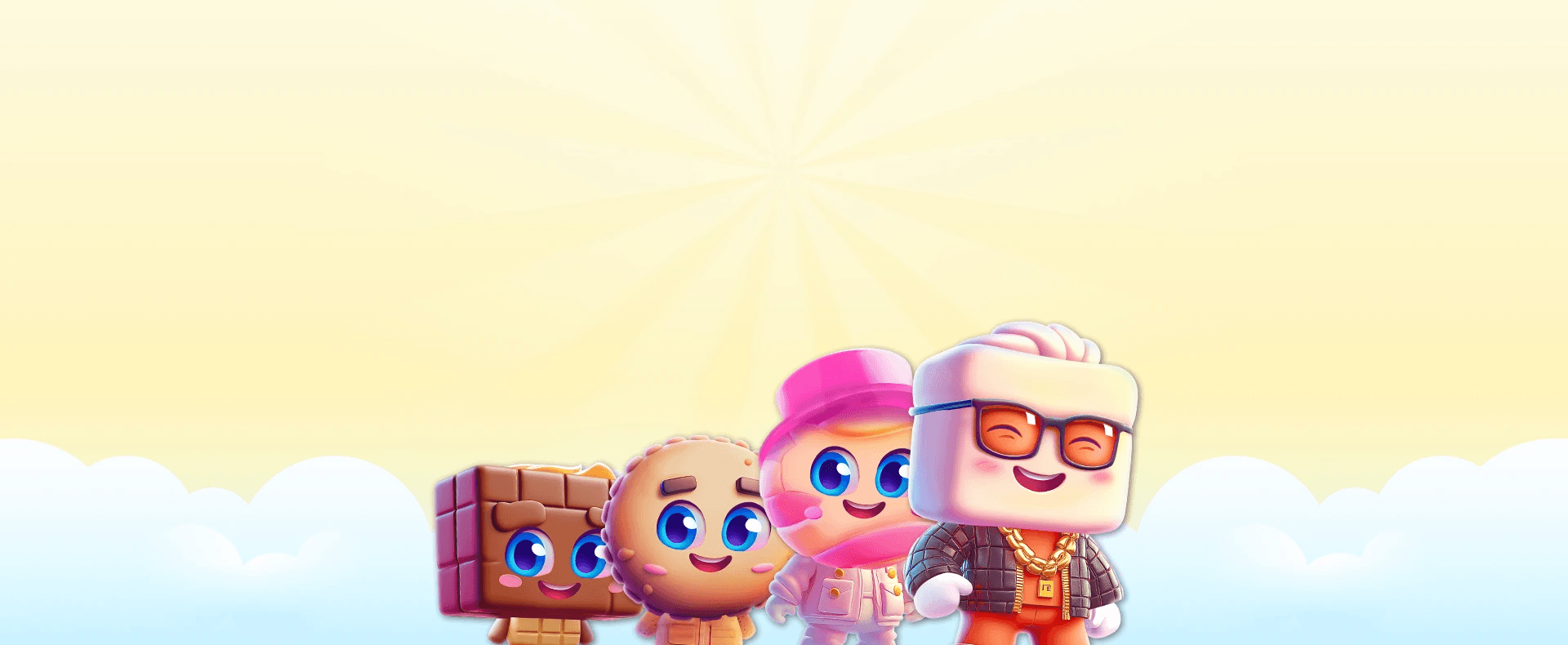
Yum Party is a tap-to-earn game designed for the Telegram mini-app ecosystem. Players generate coins by tapping, completing challenges, and upgrading candies and machines that increase their production over time.
Goal
My goal was to design a game experience combining progression systems, collectibles, leaderboards, and reward mechanics to create a continuous engagement loop, while adapting to crypto user behaviors and Telegram mini-app constraints.
Timeline
Strategy
2 Weeks
Goals
Functional
Business Scope
KPIs
Planning
Discovery
4 Weeks
Brainstorm
Double Diamond
Persona
User Interviews
Global Research
Journey Mapping
Solution
7 Weeks
User Flows
Sketching
Wireframing
Design System
Testing
Problem Discovery

Strong competition in tap-to-earn ecosystem.
Low onboarding attention span.
Telegram mini-app performance limitations.
Short session behavior.
Retention driven by rewards


5+ actions needed to understand rewards.
Progress hidden in secondary screens.
Upgrade system lacked immediate feedback.
Reward probabilities unclear.
Users abandon tap-based games when they cannot quickly understand: What to do? Why it matters? What they gain?
Research & Exploration
Methods Used
Market
Competitive Benchmark
Product Pattern Review
Feature Gap Identification
Behavioral
Behavioral Flow Mapping
Interaction Audit
Validation
Heuristic Evaluation
Early User Testing
Competitive Benchmark
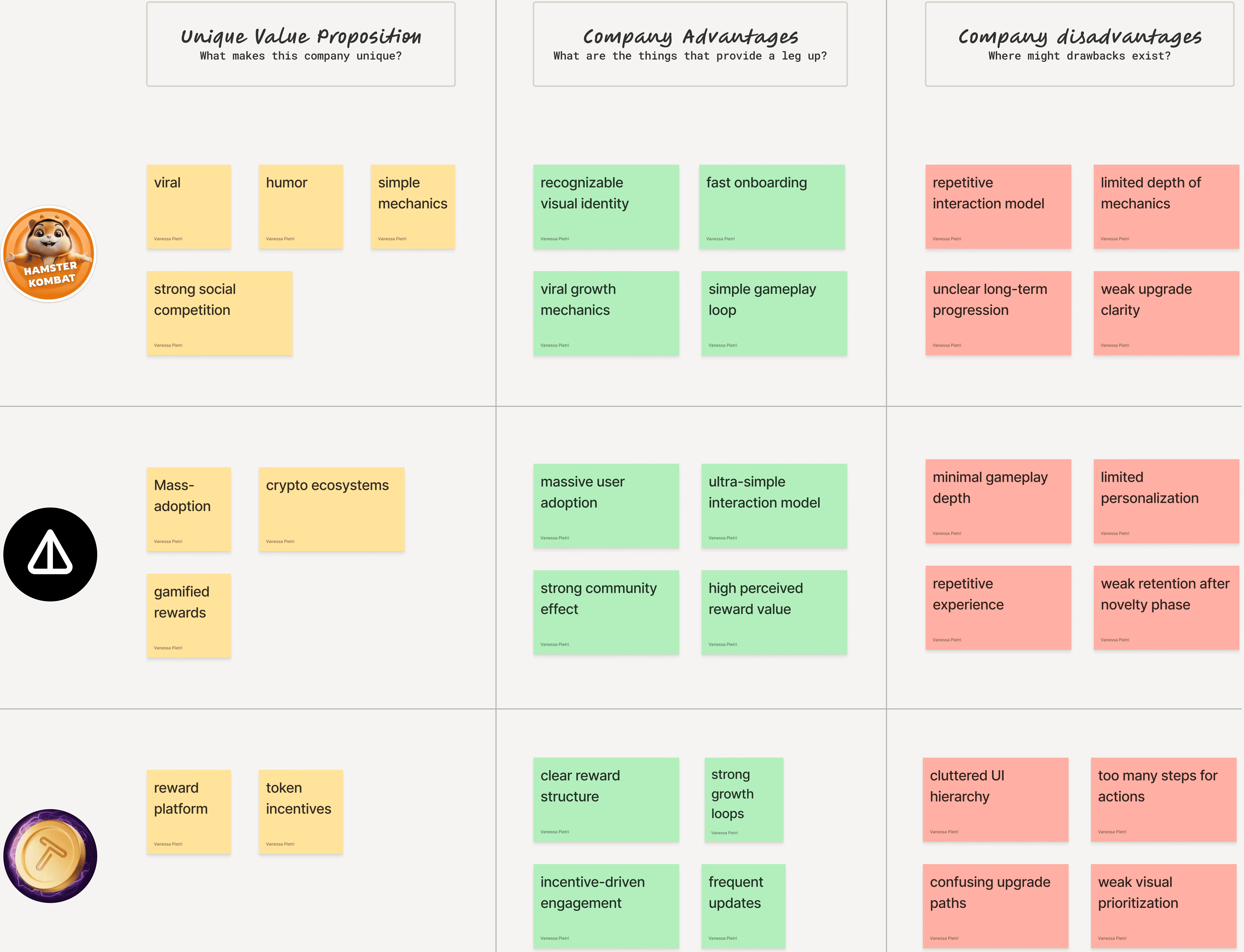
To understand how players interact with tap-to-earn games, I analyzed several existing Telegram mini-apps and casual tap games. The goal was to identify usability patterns and product opportunities.
Key Behavioral Patterns
I identified the behavioural insights that informed the UX strategy and product architecture of Yum Party:
Players disengage when
Reward logic unclear.
Progress hidden.
Too many taps.

Players engage when
Rewards are immediate.
Progress is visible.
Actions produce feedback.

Product opportunities
Clear feedback.
Visible progress
Lasting engagement


Player Archetypes

Andre Petrov
·
The Optimizer
32
Warsaw
Polish
Data Analyst
Usage Pattern
Favorite Game
Short frequent sessions
Clash of Clans
Goals
Pain Points
Maximize rewards
Unlock upgrades fastechanics
Hidden mechanics
Unclear upgrade value
Needs
Design Implication
Clear ROI preview
Visible stats
Instant feedback
Show upgrade value before action.

Maya Santos
·
The Collector
26
São Paulo
Brazilian
Graphic Designer
Usage Pattern
Favorite Game
Sessions during idle moments
Candy Crush
Goals
Pain Points
Collect rare items
Unlock visuals
Experience surprises
Repetitive rewards
Unclear rarity levels
Low feedback variety
Needs
Design Implication
Visible rarity tiers
Rarity indicators
Highlight rarity and amplify reward feedback.

Leo Park
·
The Competitor
22
Seoul
Korean
Student
Usage Pattern
Favorite Game
Frequent leaderboard checks
Brawl Stars
Goals
Pain Points
Rank higher
Progress faster
Outperform peers
Hidden ranking logic
Slow visible progress
Unclear score impact
Needs
Design Implication
Live ranking indicators
Progress comparison
Milestone rewards
Make progress and ranking visible at all times.

Sofia Ivanova
·
The Trader
30
Dubai
Russian
Crypto Consultant
Usage Pattern
Favorite Game
Based on reward opportunities
Axie Infinity
Goals
Pain Points
Maximize value
Time actions strategically
Exploit reward systems
Unclear reward logic
Hidden probabilities
Unpredictable outcomes
Needs
Design Implication
Transparent mechanics
Value indicators
Predictable systems
Surface value signals and system transparency.
Design Principles
Make actions obvious
Buttons, icons, and interactions must be instantly recognizable without explanation.
Always respond instantly
Every action should trigger immediate visual feedback confirming the system reacted.
Value before commitment
Users must understand the outcome of an upgrade before choosing it.
Keep progress in sight
Players should always see their status, gains, and progression without searching for it.
Be clear, not mysterious
Game systems should feel fair, understandable, and predictable.
Design for every player
Interfaces must adapt to different languages, values, and content lengths.
UX Strategy
Usable Everywhere
Show Value Early
Keep Progress Visible
Remove Uncertainly Fast

Information Architecture
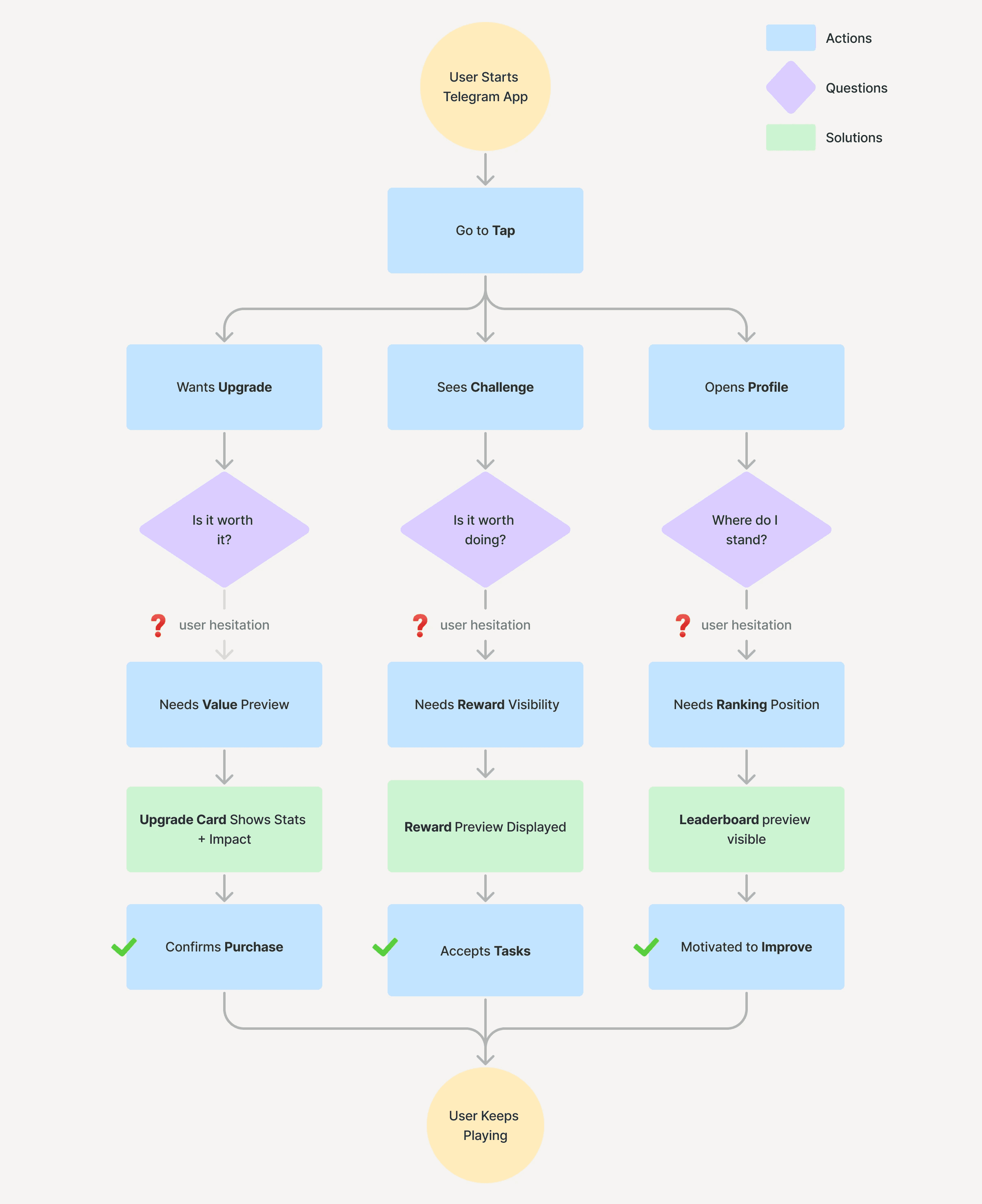
The architecture prioritizes decision clarity over navigation structure. Instead of structuring the experience around screens, I mapped how players interpret actions, evaluate outcomes, and choose their next move. This approach ensured that information, feedback, and system signals appear exactly when they are needed, reducing friction and guiding players naturally through the experience.
Behavioural Decision Architecture
I built this behavioural decision architecture as a key decision moments where users pause or hesitate. By identifying what players need to understand before acting, the interface delivers the right signals at the right time, reducing friction and supporting confident actions.
Interaction System Map
I designed this interaction system map to shows how product systems work together to drive engagement. Centered around the core gameplay loop, each layer supports a behavioral role, ensuring the experience functions as a connected ecosystem rather than isolated features.
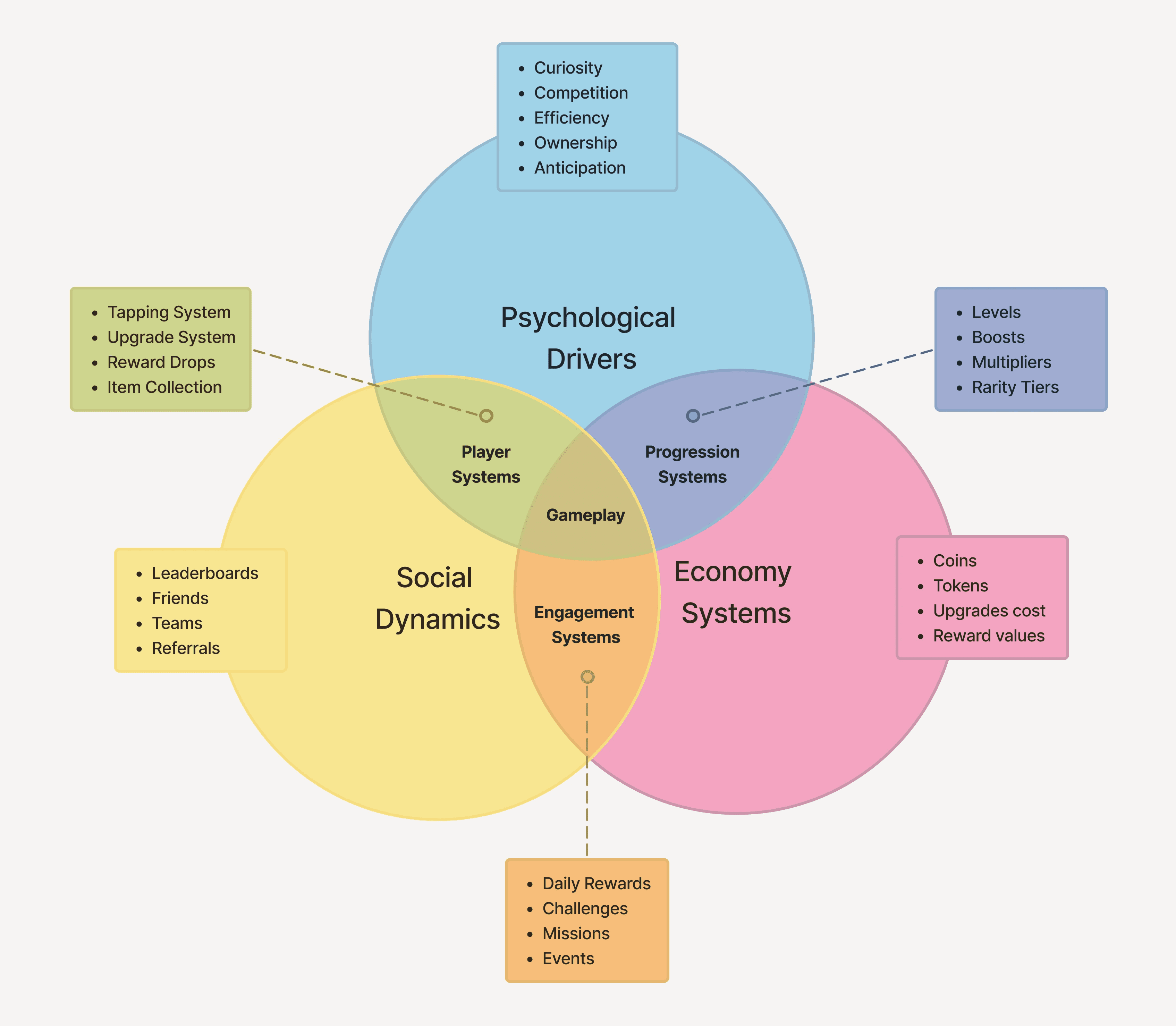
Player Systems drives interaction frequency, Progression Systems sustains long-term motivation, Engagement Systems brings users back, Social Dynamics increases competition and retention, and Economy Systems creates perceived value. Motivation Drivers influence how players engage with every system layer.
Wireframing
Visual Style
Font
Noto Sans Display
Noto Sans Display was selected for its high readability and global language support, ensuring consistent legibility across fast-paced gameplay interfaces.
H1
ExtraBold
28px
H2
ExtraBold
20px
Body
ExtraBold
17px
Colors

Primary
#F8AA05

Secondary
#33BFD8

Highlight
#9776F9

Progress
#67CD17

Stroke
#394754

Text
#FFFFFF
Component
Primary Button

Progress Bars

Popups

Upgrade Card
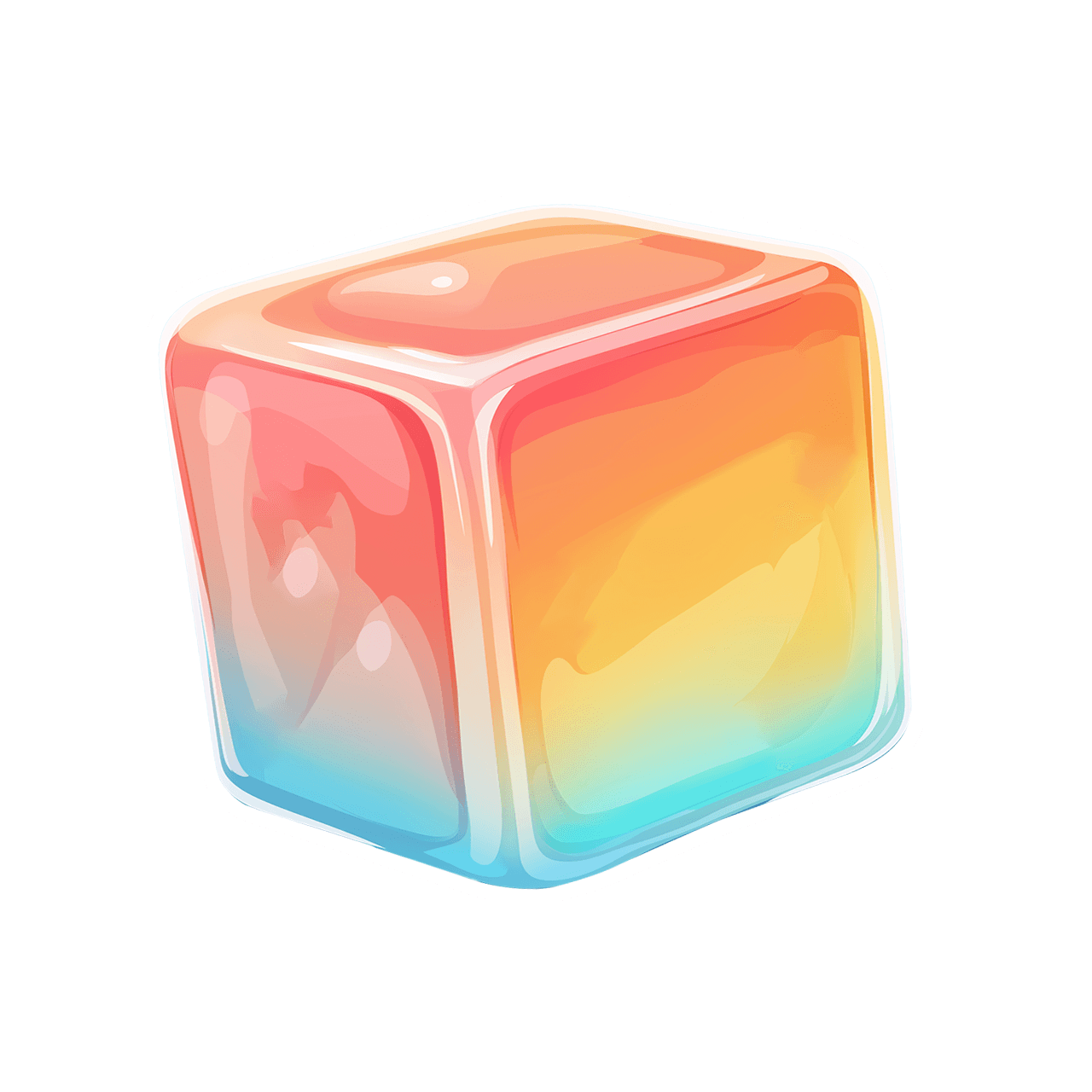
Rarity System

Common


Epic


Legendary


Rare

Legendary


Sold out
Final Design
I designed the interface to translate gameplay mechanics into visual signals. Color, hierarchy, and motion were used as feedback tools rather than decoration. Each element communicates value, progression, or interactivity, ensuring players can understand system logic at a glance while maintaining a playful and rewarding aesthetic.
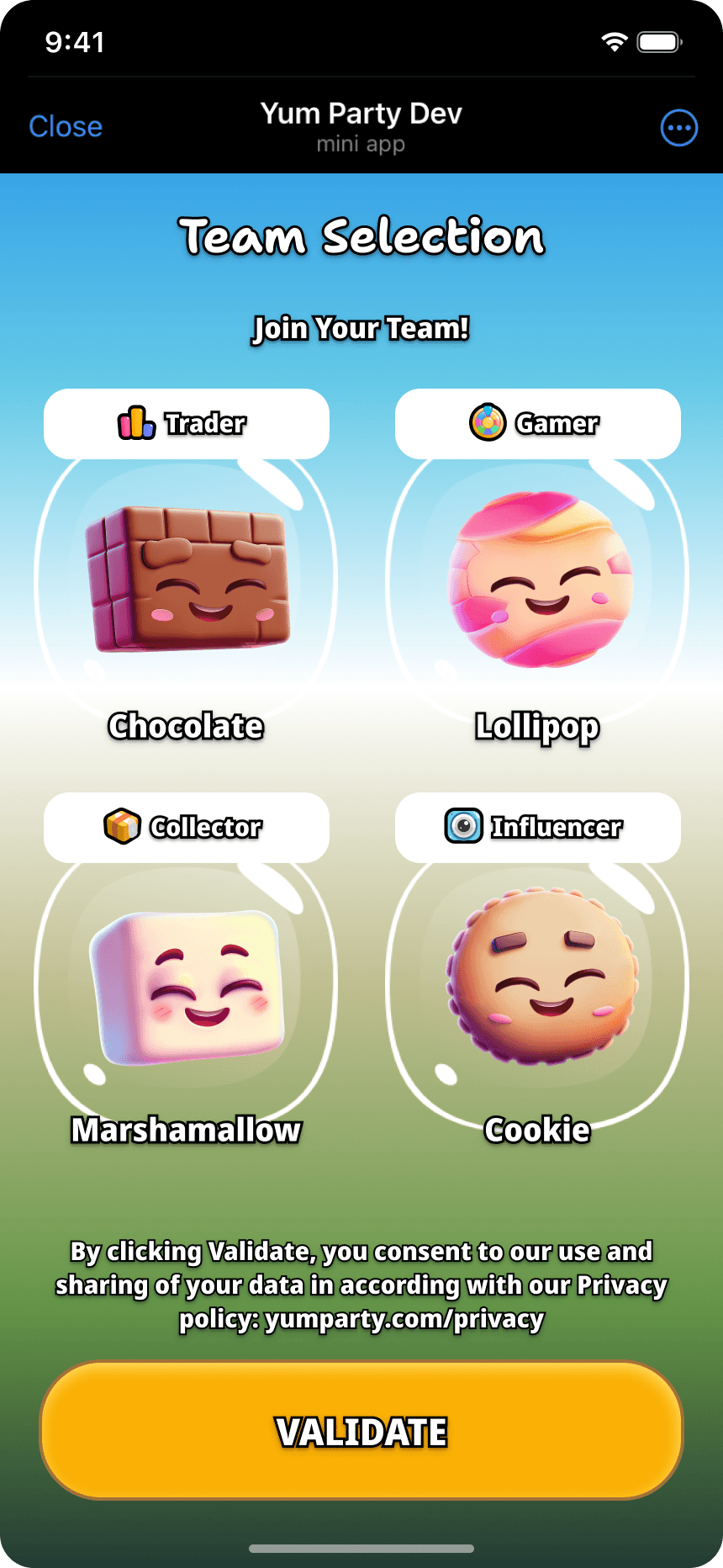
Character/Team Selection
Identity Mapping
Instant Recognition
First onboarding screen where players choose a team aligned with their playstyle (Trader, Gamer, Collector, Influencer). Each candy character visually represents a strategy archetype, helping users instantly identify themselves and decide quickly. Large illustrations guide attention while a single CTA keeps the action clear and focused.
Core Gameplay
Motor Engagement
Reward Amplification
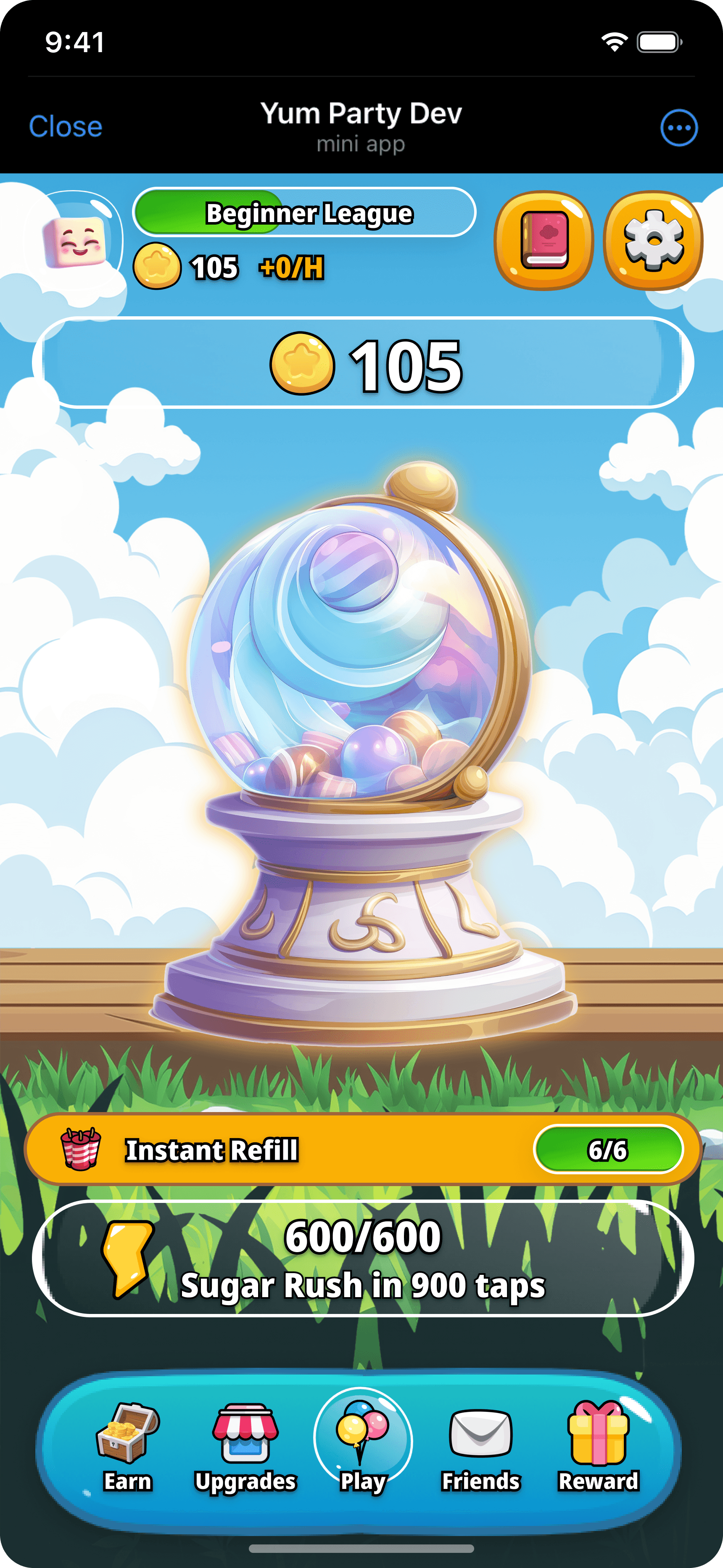
Main gameplay screen centered on the tap machine. Players tap rapidly to release candies, collect rare drops, and generate coins. The interface prioritizes focus on the core action, with live counters, reward feedback, and progress bars reinforcing momentum.
Sugar Rush Mode
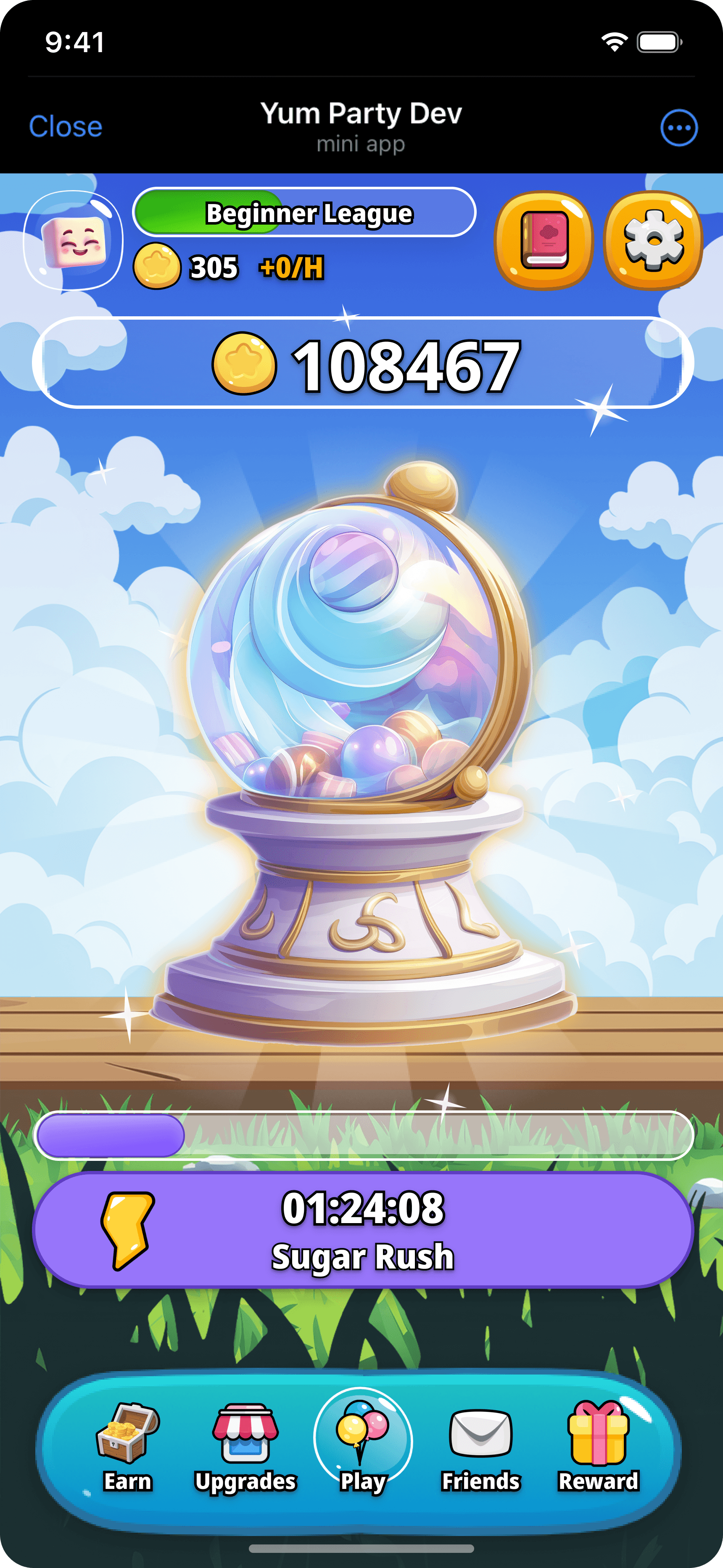
Timed boost state where speed, rewards, and visual intensity increase. Progress bar + countdown create urgency while amplified rewards reinforce excitement and short-term retention spikes.
Candypedia
Visual Hierarchy
Progress Visibility
Gamification
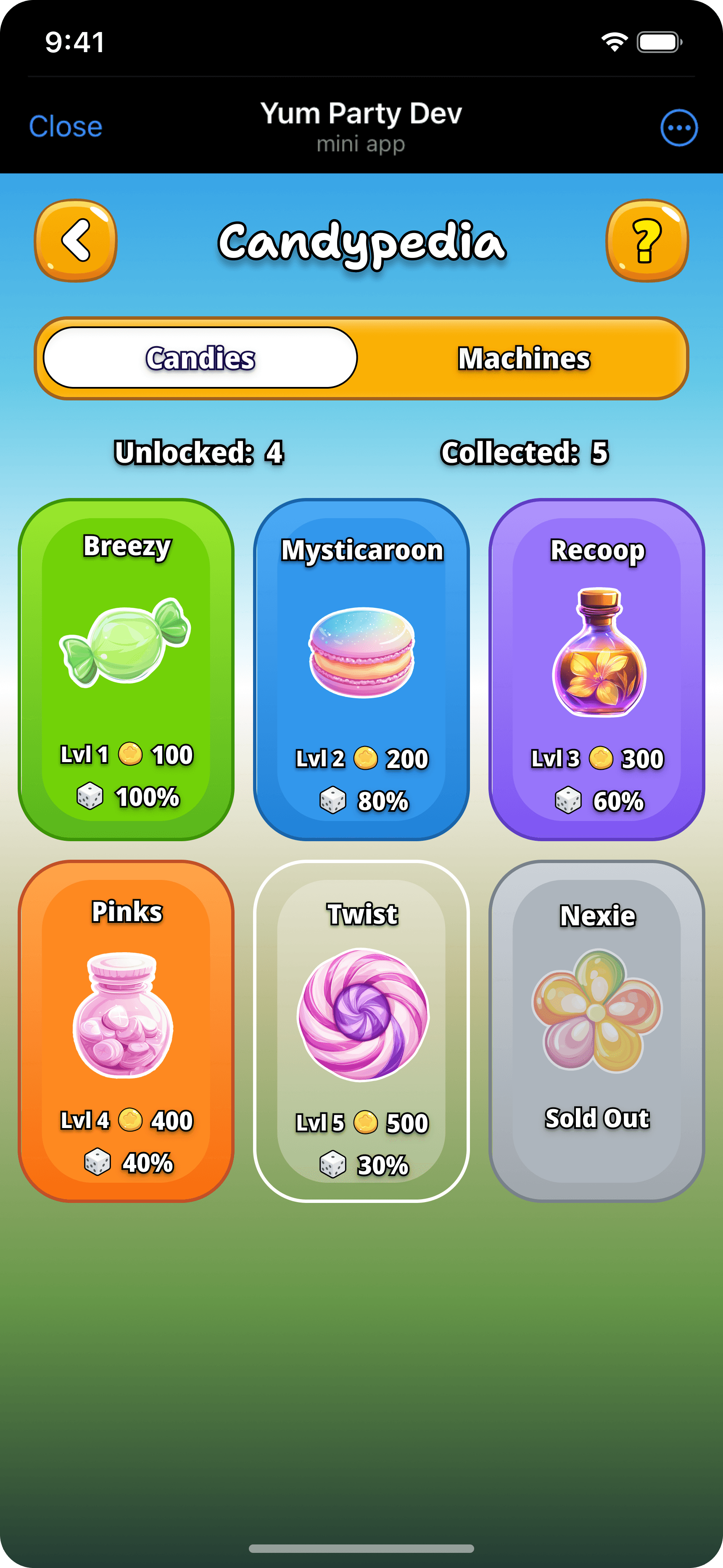
The candypedia is a centralized library displaying collectibles candies and machines with clear status, stats, and progression indicators. Items are grouped by rarity tiers (common to legendary), creating hierarchy and motivation, while unlockable machines reinforce long-term progression and goals.
Rewards
Reward Feedback
Habit Formation
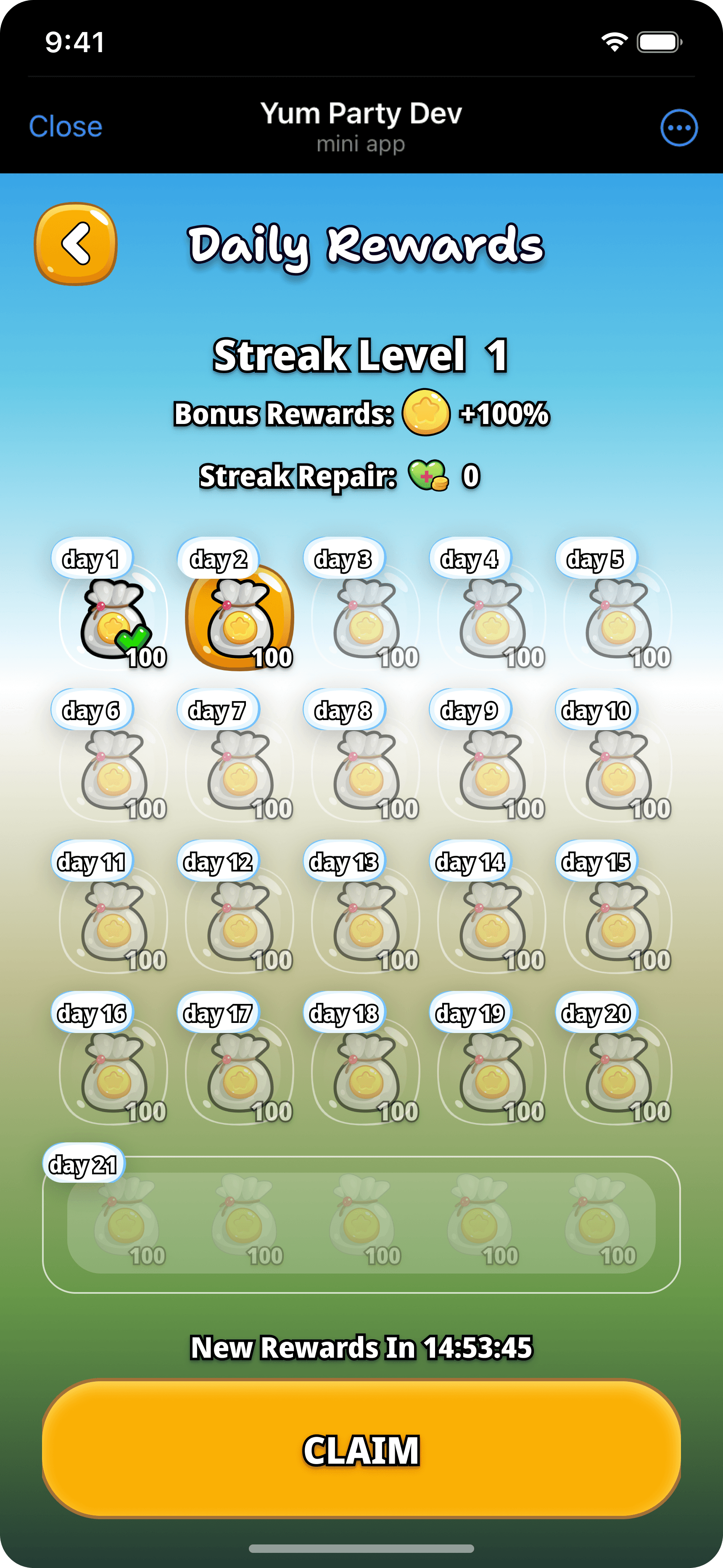
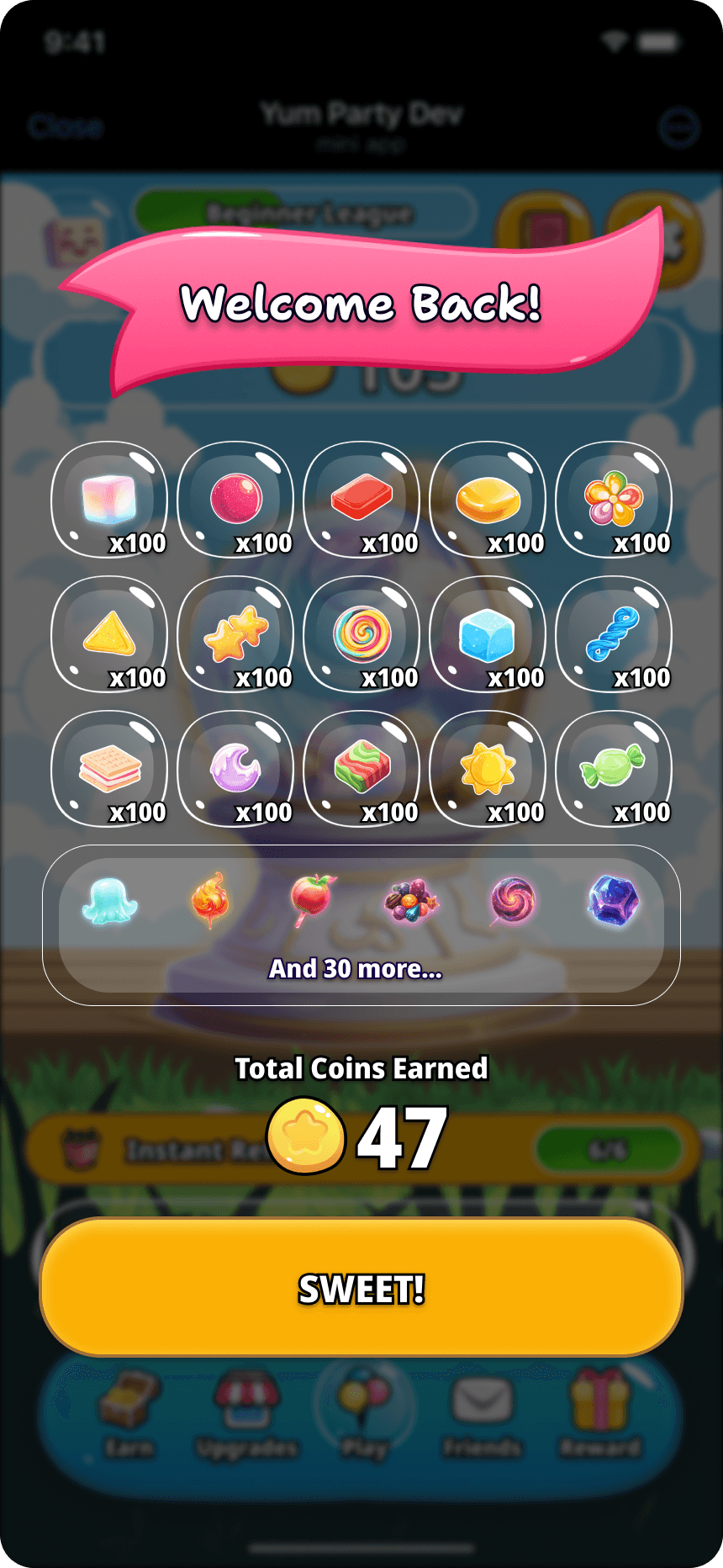
The rewards system provides structured daily bonuses and return incentives that encourage consistent engagement. A streak mechanic visualizes progress over time, while countdown timers and claim actions create anticipation and reinforce habit loops. Returning users are welcomed with summarized reward feedback, instantly showing earned items and total value to create satisfaction and reinforce positive reinforcement.

Instant Feedback
Visible Progression
Reward Reinforcement
Built for Retention
Ranking
Motivation Loop
Social Comparison
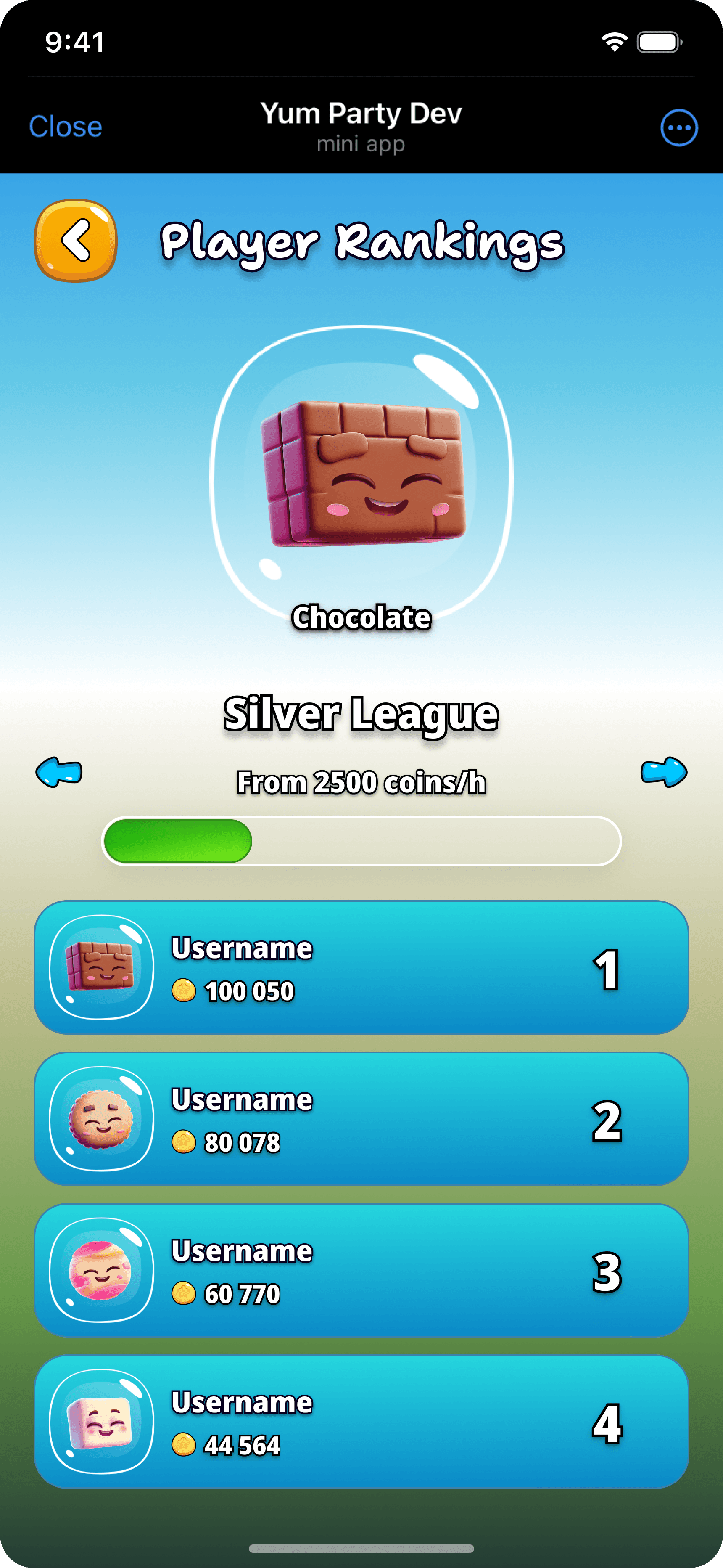
The ranking screen visualizes player status through leagues, positions, and progress bars, making performance instantly understandable. League thresholds and visible rankings create clear goals and competitive motivation, encouraging players to improve their output to climb tiers.
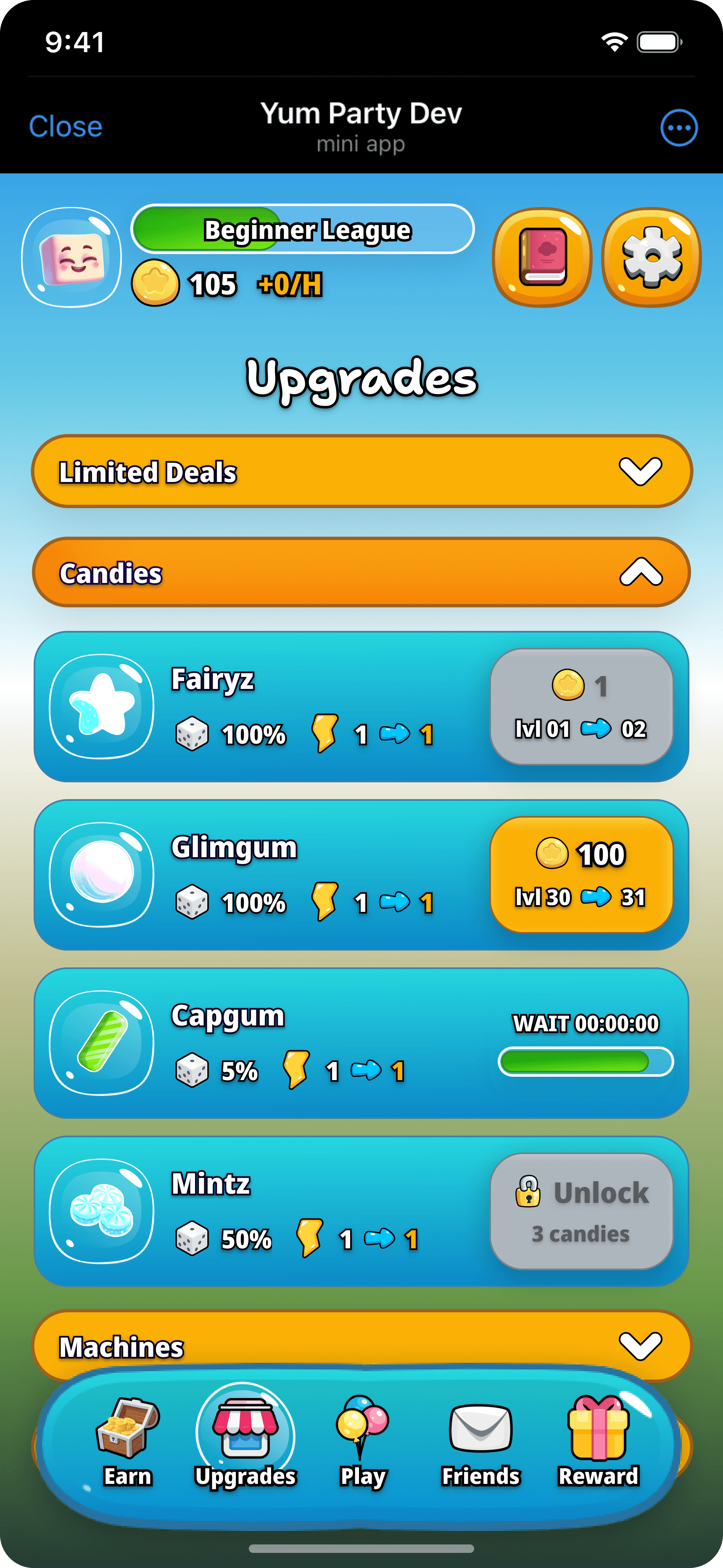
Upgrades
Progressive Disclosure
The upgrades screen centralizes all progression actions, allowing players to improve candies and machines from a single structured interface. Costs, effects, and availability states are displayed upfront, supporting fast decision-making and reducing uncertainty before upgrades.
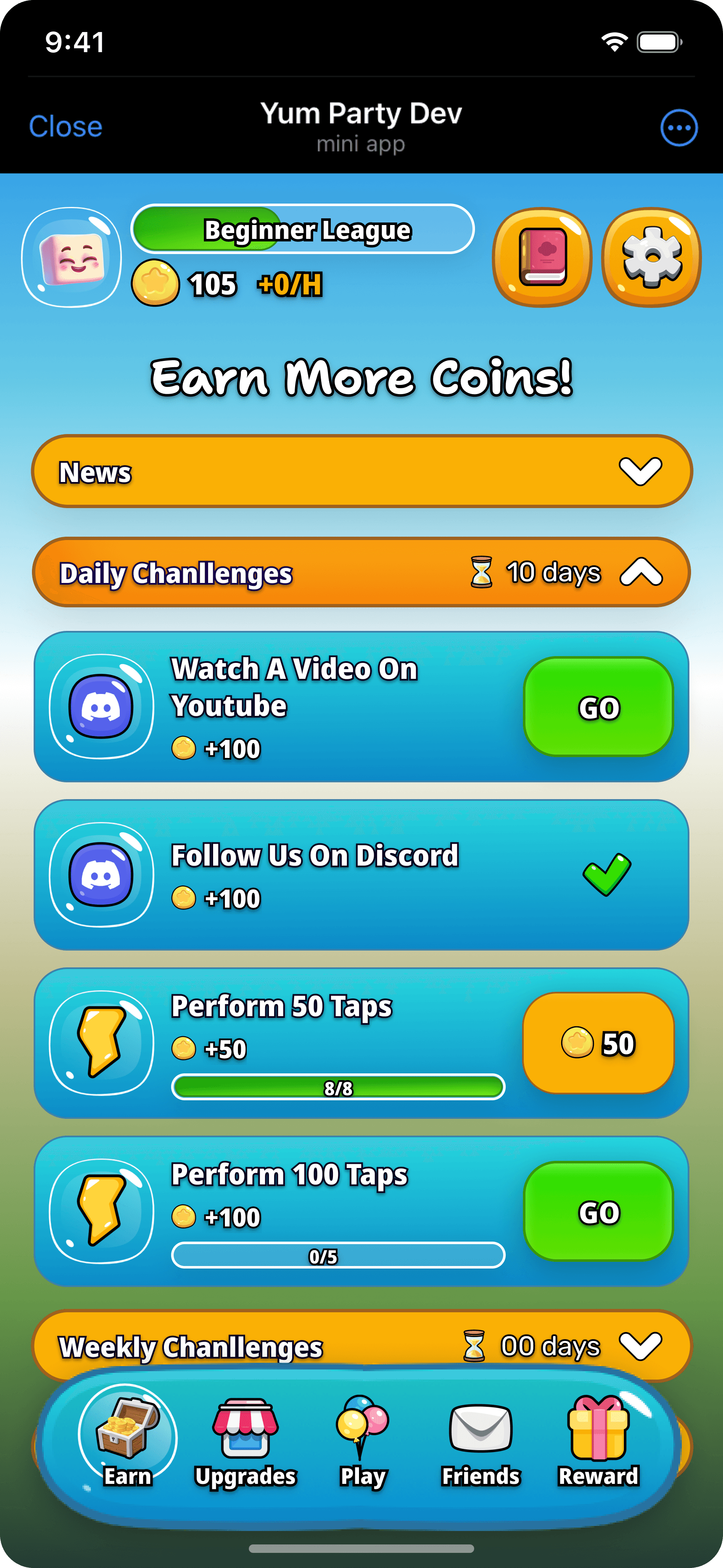
Earn Coins
Feedback Systems
Goal Driven Design
The earn section presents missions, challenges, and actions that generate coins, giving players clear paths to progress. Tasks show rewards, completion states, and timers, helping users understand effort-to-value instantly and choose goals strategically.

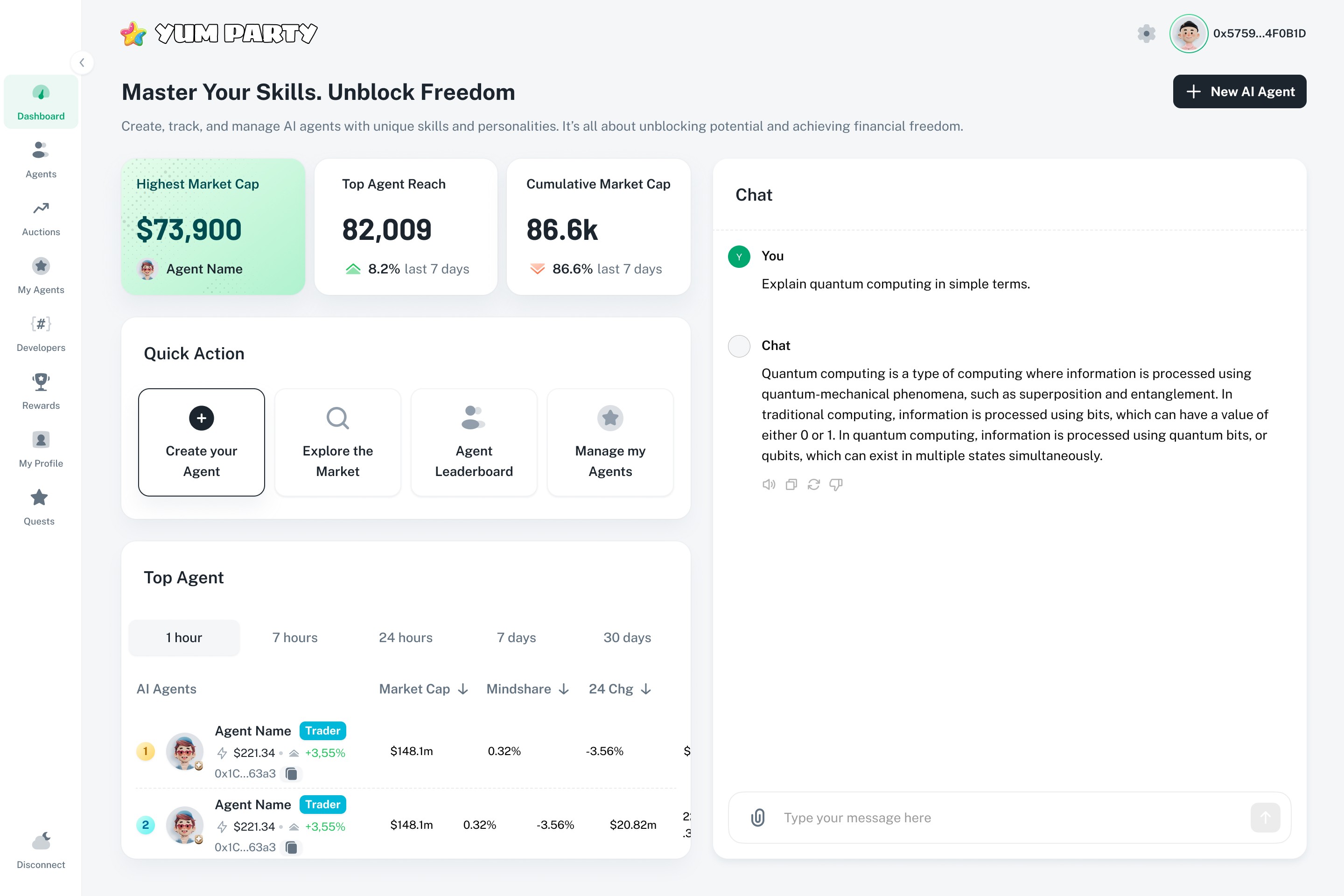
AI Agent Dashboard - Yum Party Ecosystem
Data Prioritization
Actionable Insights
As part of the Yum Party ecosystem, I designed this dashboard to explore how AI agents could be managed as evolving assets within a competitive environment. I focused on surfacing key performance indicators, rankings, and optimization actions to help users understand value instantly and make informed decisions without navigating complex data layers.
Usability Testing
Method
20 participants
Traders
Gamers
Influencers
Collectors
Tasks based
Navigation
Interaction Clarity
Tasks
Claiming daily rewards.
Navigating the Candypedia library.
Upgrading candies and machines.
Completing daily challenges.
Checking rankings and progression.
Key Findings
Low Interaction Affordance
Unclear Visual Hierarchy
Icon Comprehension Issues
Accessibility Limitations
Design Improvements
Improved button affordance and tap clarity.
Simplified visual hierarchy.
Clarified iconography with contextual cues.
Increased contrast and readability.
Reduced steps for key actions.
Impact & Results

Average sessions per user.

Community reach across social platforms.

Players joined the platform.
Conclusion
If reward clarity, progression visibility, and interaction feedback are improved, users will remain engaged longer. Yum Party demonstrates that engagement does not come from feature density, but from clarity. By structuring the experience around decision moments, visible progression, and immediate feedback, the design reduces friction while supporting long-term motivation. The project reinforced a key principle in my practice: complex systems become powerful when users understand them instantly. Whether designing gamified ecosystems or data-driven dashboards, my approach remains the same: simplify the decision space, surface value early, and build scalable interaction systems.
What’s Next?
AI-assisted optimization suggestions.
Deeper personalization of progression systems.
Advanced analytics for competitive players.
Expanded economy mechanics.
Yum Party
Scope
Global Research
User Journey
Brainstorm
Interview
User Flow
Sketching
Gamification
UI Prototyping
Usability Testing
Design System